
For companies · The cost at work
What poor sleep, stress and everyday habits cost your company
Sleep, stress, money worries, focus, smoking, drinking, back pain and menopause all show up at work as absence and lost productivity.
In lost productivity
About $1 trillion
a year in lost productivity from depression and anxiety, with 12 billion working days lost.
Up to $411 billion
a year in lost economic output from insufficient sleep in the United States.
$372 billion
in lost productivity from cigarette smoking in the United States in 2018, on top of more than $240 billion in health care spending.
£51 billion
a year: what poor mental health costs UK employers, £24 billion of it from people working while unwell.
6 working days
lost each year, through absence or presenteeism, by a worker who sleeps less than six hours, compared with one who sleeps seven to nine.
15–20%
of adults are estimated to procrastinate chronically.
68%
of people say they do not have enough uninterrupted focus time during the workday.
72%
of the $249 billion that excessive drinking cost the United States in 2010 came from lost labor and lower performance at work.
41%
of the working days lost to work-related musculoskeletal disorders in Great Britain are due to back conditions, with about 13 days lost per case.
40%
of employees worldwide felt stress during a lot of the previous day.
59%
of US employees say they are stressed about their finances right now.
$1.8 billion
a year in lost work time from menopause symptoms in the United States.
How we work with you
Your partner, from launch to results
No IT project. You choose how many credits you need, and we work alongside you so the programs fit your workforce, get used and show what has changed.

What we do with you
Fits your workforce
We look at what your teams are dealing with and set up the right programs, in the right order, for each group.
Programs made for you
If your people face a challenge our catalog doesn't cover yet, we build a program for it, with the same method and a personal protocol at the end.

Campaigns that get programs used
We plan and write the internal communication with you: the launch, the reminders and the follow-ups that keep people going until they finish.

Live sessions with experts
We organize online events with subject-matter experts on the topics your people care about most, such as sleep, stress or money.

Results reviewed together
We go through participation and the anonymous results with you, and adjust what you highlight next.
- Request a quote →
Plan it with us
Your company buys program credits. One credit unlocks one full program. We work with you from the first conversation.
How it works
See what changes, without seeing anyone's answers.
From the credits you buy to the change you can measure, in four steps.
- 1
Buy credits for your team
One credit unlocks one full program for one person. We set up your company account and your private join link.
Program credits
Example50available
Your private join link
1hprotocols.com/join/acme-7q2kCopy link - 2
Hand them out your way
Two each for a team, three for one person, one automatically for every new joiner. You decide who gets how many.
Assigned
Example- Sales team2 credits each
- New joiners1 credit, automatically
- Ana R.3 credits
- 3
Each person picks what they need
About an hour later, each person leaves with a protocol: a short plan for one everyday challenge, built from what the evidence supports and fitted to their own days. This is what one looks like.
My Sleep Protocol · example
11:00 pm → 7:00 am
owlfocus: qualitytwo changes- Wake up
- 7:00 am
- Caffeine cut-off
- 1:00 pm
- Dim-down alarm
- 10:00 pm
- Lights out
- 11:00 pm
Weeks 1–2 · Anchor
- Fixed wake time of 7:00 am, 7 days a week.
- Outdoor daylight within the first hour.
- Dim-down at 10:00 pm.
- 4
You see what changes
Four one-tap check-ins over 30 days feed your dashboard: how many joined, how many kept their plan, how many rate themselves better. Never anyone's answers.
Request a quote →We will reply with a quote and, if you wish, a proposal for a pilot with a small group.
Example dashboardIllustrative figures - Used
- 37 of 50
- Joined
- 28
- Check-ins answered
- 64%
- Keep their plan most days
- 71%
- Rating up 2 points or more
- 68%

You see the totals, never the individual.
- You see how many credits each person has received and used, so that you can manage them. Never which programs they chose, nor their answers, progress or protocol.
- Totals are shown only for groups of five people or more.
- Employees are told exactly what you can see before they join.
Wellbeing Workplace
Show your workforce, and the talent you want to hire, that you mean it
Companies that offer the programs to everyone earn the Wellbeing Workplace mark. The first level is included with your credits; the Certified level adds our yearly audit. A public page anyone can check, and a badge for your careers page and job ads.
Committed to Wellbeing
Offer the programs to your whole workforce, with a credit for each employee and the time to do them.
Certified Wellbeing Workplace
The same, validated by us: a yearly 1h Protocols audit checks your wellbeing practices, and at least one in five of your workforce has started a program.
The company sees who joined and the credits they used, never which programs employees chose or their answers.
Open to audit: 1h Protocols may check what any company declares, and the Certified level is given only after our audit of the company's practices, renewed every year.
See the Wellbeing Workplaces →The programs
Start with ours. Or ask for your own.
Need a topic specific to your workforce, or one of ours tailored to the way your company works? We partner with experts in that field to build a program just for you, with the same method and a personal protocol at the end.
- 1h ProtocolAvailable

forBetter Sleep
Find what keeps you up and leave with a sleep routine built around your own times.
- 1h ProtocolAvailable

toStop Procrastinating
Pick the task you keep putting off and leave with a plan to start it today.
- 1h ProtocolAvailable

toTake Control of Your Phone
Choose the two phone habits that matter most and set up your phone to back them.
- 1h ProtocolAvailable

toLose Weight Sustainably
Eating and movement habits built around your real week, with nothing to count and no diet.
- 1h ProtocolAvailable

toReduce Your Drinking
Plan for the moments you drink more than you want, and know what you'll do instead.
- 1h ProtocolAvailable
toManage Back Pain
Find your back-day pattern, then build a plan for ordinary days and for the days your back goes.
- 1h ProtocolAvailable
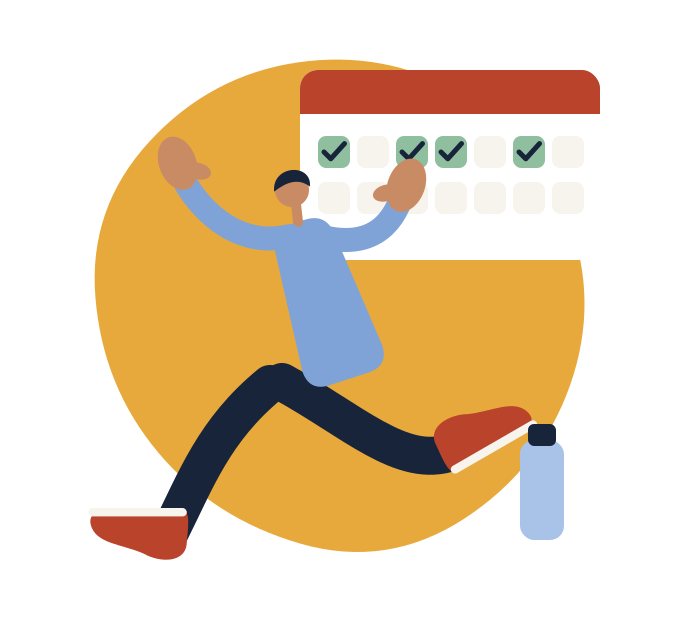
toBuild an Exercise Routine
A weekly routine you can keep, with a short version for busy days and a way back after a missed week.
- 1h ProtocolAvailable
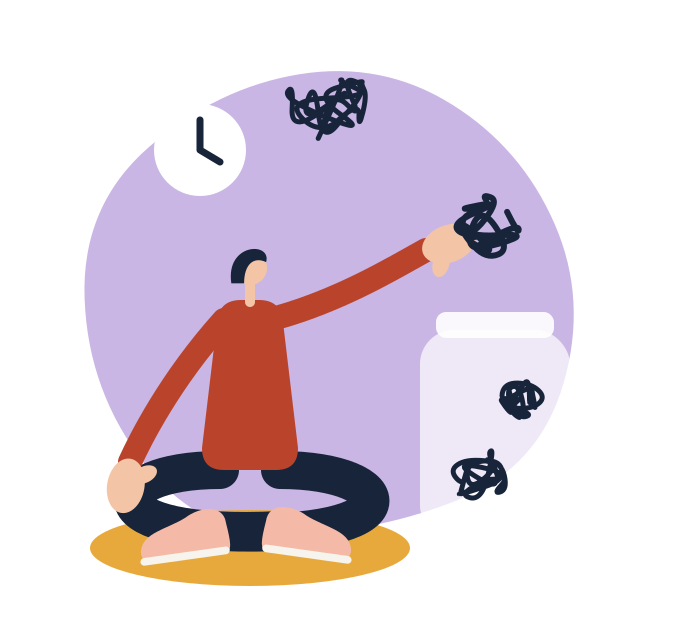
toReduce Worry and Overthinking
Know what to do when the same worries come back, and get your attention back on your day.
- 1h ProtocolAvailable
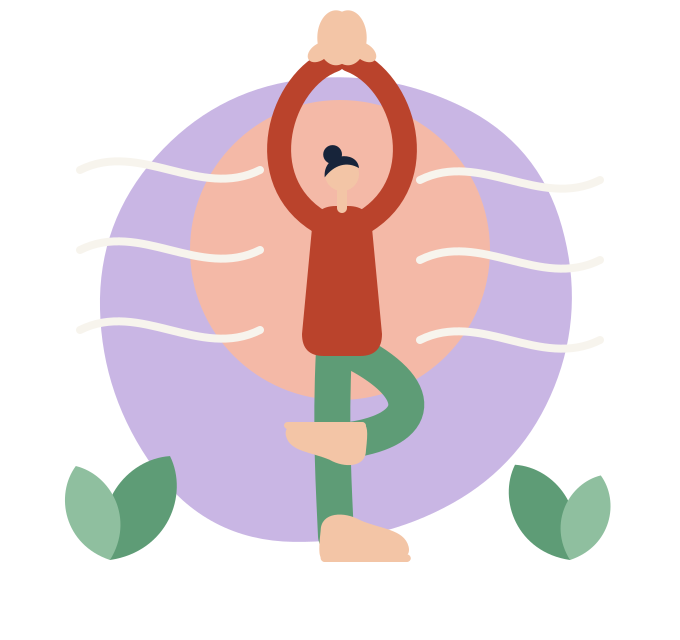
toManage Everyday Stress
Pinpoint the stress that keeps coming back and leave with changes you can make this week.
- 1h ProtocolIn production

toGet Control of Your Money
See where your money goes and set a simple monthly routine that keeps you in charge of it.
- 1h ProtocolIn production

toQuit Smoking or Vaping
Set your quit date and have a plan ready for each trigger before it shows up.
- 1h ProtocolIn production
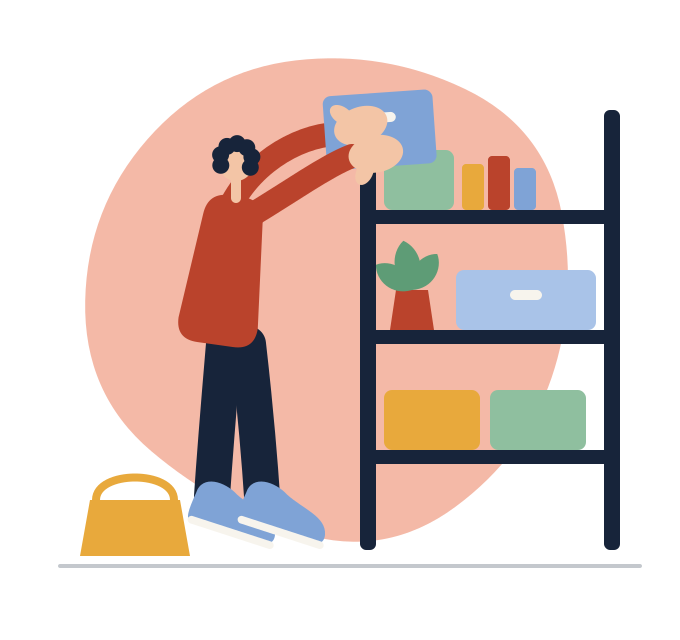
toOrganize Your Home
Decide what stays, share out the chores and set routines that keep your home in order.
- 1h ProtocolIn production
toManage Anger and Reactions
Spot your triggers early and have a pause ready that changes how the moment goes.
- 1h ProtocolIn production

toNavigate Menopause
Get clear on what's changing for you and walk into your next appointment prepared.
- 1h ProtocolIn production
toHelp Your Child Sleep
A calm bedtime routine for your child, and a plan you both can follow when they wake at night.
Pricing
One credit, one program.
Each credit unlocks one full program for one person, including its four check-ins over 30 days. You decide who receives how many credits; each person decides which programs to take. Credits are priced by volume and invoiced to your company.
Request a quote
Tell us about your company
We will reply with a quote and, if you wish, a proposal for a pilot with a small group.
Questions
Questions from HR and People teams
How do program credits work?
Your company buys a number of program credits. Each credit unlocks one full program for one person. You assign credits to individuals, and each person spends them on the programs of their choice. Credits you have not assigned remain in your balance, and unused credits return to it if someone leaves.
What can we see about individual employees?
Who has joined, and how many credits each person has received and used, so that you can manage your credits. Nothing else: not which programs they chose, nor their answers, progress or protocol. Totals are shown only for groups of five people or more.
How do employees join?
With your company's private link. Each person creates their own account, and you may restrict the link to your company's email domain. You can also send invitations from your dashboard, with credits set aside for each person.
Which languages are available?
The website is available in English, Spanish, Italian, Portuguese, French and German. The programs themselves are currently in English; further languages are in preparation.
Is this medical or psychological care?
No. The programs are educational and built from research and curated experts. They do not replace a professional, and they say so whenever someone should consult one.
What happens when our plan ends?
Unused credits can no longer be spent and nobody new can join. Programs that people have already unlocked remain theirs, together with their protocols.
How do we pay?
By invoice, for the number of credits you buy. You can buy additional credits at any time.