Back pain
Lifting with back pain: what Greg Lehman found on bending
Bend your knees, never round your back? In workplace trials, lifting training didn't prevent back pain. Greg Lehman on what the bending research says.
1h Protocols · October 25, 2026 · 12 min read
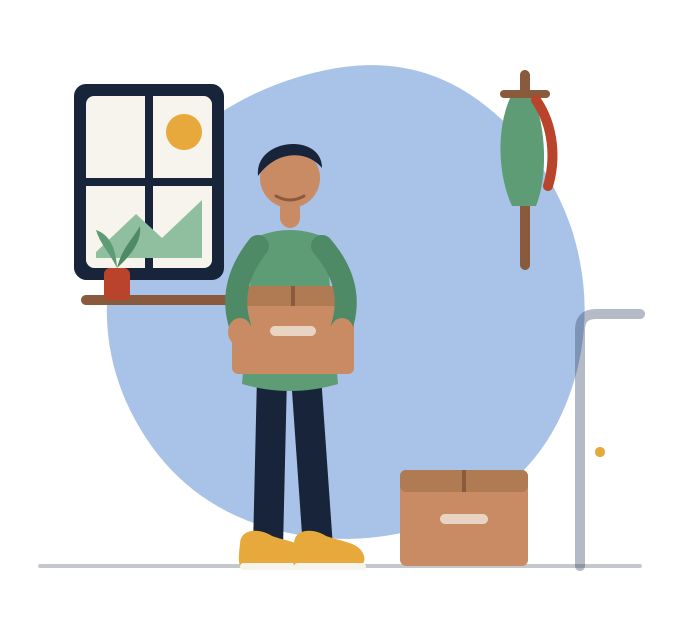
Your back has been sore for a few days. The laundry basket is on the floor, and a voice in your head says what you've heard for years: bend your knees, keep your back straight, never round it. So you squat stiffly, hold your breath, and lift as if the basket might break you.
That rule is one of the most repeated pieces of back advice, and one of the least supported. Lifting the way that feels comfortable, and building up what you lift bit by bit, has more behind it than any one technique.
Greg Lehman is a physiotherapist who teaches clinicians about pain and runs the Movement Optimism channel on YouTube, and sells courses on pain science and biomechanics. A 2020 lecture by Lehman sets out "seven reasons to not worry about maintaining a neutral spine." The first: there is very little prospective evidence that bending the spine is, on its own, a risk factor for low back pain (Lehman, 2020, from 0:43). Follow two groups of workers, one that bends more and one that bends less, and "there's no research that says that group is more likely to have pain" (1:03).
Lehman doesn't say load never matters. If you "lift more and lift a lot and have a high frequency," load "might be a small factor to increase your chance of pain" (1:27 to 1:35).
What the research says about bending and lifting
1. Lifting lessons didn't prevent back pain
A Cochrane review pooled the workplace trials. In seven randomized trials with 19,317 employees, those trained in how to lift reported levels of back pain similar to those who got no training at all (Verbeek et al., 2011). More intensive training did no better than short instruction. The authors rated the evidence as moderate quality: lifting advice and training, with or without lifting aids, didn't prevent back pain.
2. A rounded back isn't a proven cause
The next question is the shape itself. A 2020 review looked for a link between how much the lower back bends during a lift and back pain. Most of the studies it found showed no difference between people with and without back pain, and the authors called it low-quality evidence that more bending during lifting was not a risk factor (Saraceni et al., 2020). That's a small, weak evidence base, so the fair summary is that rounding isn't a proven cause, and it hasn't been shown to be without risk either.
Robin Nürnberg, a German physiotherapist who posts as Critical Physio and offers coaching and an online seminar, goes further. On the Coach Stef Podcast, Nürnberg listed the beliefs that now seem unhelpful: always sit straight, don't lift anything heavy when your back hurts, or only lift from the knees (5:10). Nürnberg's own view: "grundsätzlich ist der Körper dafür absolut designt, Dinge mit einem runden Rücken hochzuheben" ("basically, the body is absolutely designed to lift things with a rounded back") (Coach Stef Podcast #80, 5:51). The caveat comes just before: "wenn man zum Beispiel akute Schmerzen hat oder gerade Nervenschmerzen hat, dann darf man das modifizieren, die Hebetechnik" ("if you have acute pain, for example, or nerve pain right now, you can change how you lift") (5:42).
Not everyone agrees. Stuart McGill, the spine biomechanics professor whose books, such as Back Mechanic, many coaches follow, teaches people to hinge at the hips and spare the spine under load, an approach McGill calls spine hygiene (Huberman Lab, 2024). If that approach suits you and you like doing it, keep it. Where Lehman and Nürnberg differ is in treating every bend as a danger.
One more piece keeps this honest. A 2011 review of 36 studies found that heavy workloads, frequent lifting, and bent, twisted or awkward positions at work went with more back pain (Heneweer et al., 2011). Those were whole jobs, measured over months or years, and they show links, not causes. They fit Lehman's "load might be a small factor": how much you lift and how often seem to count more than how you hold your back for any one lift.
3. Backs get used to load
Lehman's guidebook puts the alternative simply: "The body is designed to respond to the physical stresses we place on it and get stronger and more resilient." The trouble comes when we do "more than we are ready for," and that "doesn't mean that those activities are off-limits it just means we have to slowly start doing those activities to build our tolerance" (Recovery Strategies, p. 32).
One Swedish trial tested heavy lifting directly. Seventy adults aged 25 to 60 with back pain lasting more than three months were split into two groups for eight weeks: one trained with heavy deadlifts, the other with gentle, low-load movement exercises, and both got pain education. Neither group did better at two, 12 or 24 months, and at least half of each reported less pain and disability (Michaelson et al., 2016). Heavy lifting, built up over weeks, did as well as gentle work.
Here's what that looks like in practice. The parent who lifts a toddler many times a day has a back that's used to a toddler. The same person moving a sofa after a year of desk work is asking their back for something new. Our guide to back pain after a busy day covers the days when you do much more than usual.
Why bending can still feel dangerous
4. The Guard learns to watch every bend
After a bad spell, many people stop bending, or bend only stiffly and carefully. In the 1h Protocol to Manage Back Pain, that's the Guard: protecting your back helps in the first days, and when it stays, it tends to go with more pain and more limits.
Some of it is learned. In interviews with 23 adults with back pain in New Zealand, people who'd been given set postures and lifting rules to guard their backs described constant vigilance, watching their backs for years (Darlow et al., 2013). Others had heard a clear "keep moving" message, and that stayed with them too.
Some of it runs below what we notice. In a 2017 Australian study, 44 adults with long-lasting back pain looked at pictures of bending and lifting. On quick reaction tests, as a group, they linked round-back bending with danger, whether they reported much fear of bending or little (Caneiro et al., 2017). Two of the authors, Peter O'Sullivan and Lorimer Moseley, earn fees teaching about pain.
Lehman's guidebook names rules like "Don't bend your back, lift with your legs" as part of the problem (p. 42). If you think bending is harmful, the guidebook says, you start to move in a guarded, fearful way, as if there were one right way to move "instead of thinking that there are countless variations and many, if not all, are acceptable."
"We've essentially told certain body parts that you should continue 'limping' even after there is no need to." Greg Lehman, Recovery Strategies, p. 42
How to get back to lifting
5. Check for warning signs first
Serious causes of back pain are rare, but a few signs mean more. If any of these start, get help.
Get medical help straight away:
- Trouble peeing, or leaking pee or poo without meaning to
- Numbness around your genitals or bottom, or sex feeling different
- Both legs weak, numb or tingly, or you can't walk because of the pain
- Pain after a serious fall, accident or blow
- Chest pain or trouble breathing with it; or new pain far worse than before, or getting worse fast
See a doctor first:
- A fever, or feeling hot, shivery or unwell
- Cancer in the past, or weight lost without trying
- Pain worse at night or unchanged by moving or resting; high between the shoulder blades; one leg weak or numb
If any sign in the second group applies to you, see a doctor before you build up what you lift; in the meantime, lift only what your day needs, the way that feels comfortable. If you've had back surgery recently, follow the advice of the team that treated you. And if a new flare isn't getting better after a few weeks, keeps getting worse, or worries you, see a doctor.
6. Make the first bend a relaxed one
Start with the bend you'd normally guard, like picking up a sock or reaching to a low shelf. Breathe out, let your back move the way it wants to, and go only as far as feels easy. Nothing more. Holding your breath and bracing is part of the Guard, and each easy bend gives your back's alarm something new to learn from. Our guide to the first hours of a flare uses the same move.
7. Lift the way that feels comfortable, and split what's heavy
There's no one right technique to perfect. For a light thing, lift it however feels natural today. For a heavy job, change the job: two trips with half the load, swap sides, take a break between loads, or ask for help. At work, use the equipment and the help that's there. If you lift for a living, our guide to back pain at work covers what employers can change.
After a long sit, walk for a minute before the heavy thing; see back pain from sitting.
8. Build up what you lift, bit by bit
Australia's care standard for low back pain tells people with back pain: "Do not wait for all the pain to be gone before you start moving." If activity leaves your pain worse and it stays that way, "take things a little easier at first and gradually build up over a few days or weeks" (ACSQHC, 2022).
Pick one thing you've stopped lifting, like the shopping or a grandchild, and start with the smallest version you'd still call doing it. Keep the effort at 5 or under on a scale where 0 is no pain and 10 is the worst you've had, and check the next morning: no worse than the morning before? Then add a little the next week. If a flare comes, go back one step, not to zero. If you'd got back to carrying two bags, start again with one.
Back to the laundry basket
The basket is still on the floor. Breathe out, bend the way that feels easy, and carry half if the whole thing is too much today. As Lehman's guidebook puts it, "We respond positively to stress. The key is finding the right amount of stress" (p. 32). The rule you were taught was meant to protect you. What the research points to instead is a back that's used to lifting, built up a little at a time.
To build this around your own back days, try the 1h Protocol to Manage Back Pain, a program of practical education. Its free first chapter starts with a quick check for warning signs, then finds your back-day pattern (the Brace, the Big Day, the Long Still Day, the Volume Knob, or the Tune-up) and gives you one thing to do tomorrow. The full program takes about an hour: you see the Alarm, the Guard and the Load in your own last bad day, walk one back day and fit seven habits to your own times (one of them is how you lift), and plan the first hours of a flare and the days after it. You leave with two or three things to start now, each with an alternative for harder days, a flare card for your lock screen, and fourteen days to try it, with a sheet, reviews on days 7, 14 and 30, and four one-tap check-ins by email if you're signed in. Start free
Frequently asked questions
Is it bad to lift with a rounded back?
A rounded back while lifting isn't a proven cause of back pain. A 2020 review found low-quality evidence that more bending during lifting was not a risk factor (Saraceni et al., 2020), and Greg Lehman found very little evidence that bending is a risk factor on its own (Lehman, 2020, from 0:43).
Should I always bend my knees to lift?
Only if it feels comfortable. In seven workplace trials, people taught a lifting technique reported about the same back pain as people who weren't (Verbeek et al., 2011). Pick the way that feels easiest today.
Can I lift heavy things with back pain?
Lift what your day needs, the way that feels comfortable, and split heavy jobs into smaller loads or ask for help. To get back to heavier things, start small and build up over days or weeks; with any warning sign, see a doctor first.
Why does bending hurt my back?
Pain is real, but it works more like an alarm than a damage meter, and after back pain bending often feels dangerous. In one study, adults with long-lasting back pain linked round-back bending with danger on quick reaction tests, whether or not they reported fear of bending (Caneiro et al., 2017). If bending brings on new numbness or weakness in a leg, see a doctor.
How do I get back to lifting after a flare?
Start from a step below where you'd got to, not from zero: if you'd got back to carrying two bags, start with one. Keep it at 5 or under out of 10, and add a little each week. See what to do in the first hours of a flare and rest or move.
Sources
This article draws on Greg Lehman's pain guidebook and lecture on spine flexion, Robin Nürnberg's interview on the Coach Stef Podcast, Stuart McGill's interview on Huberman Lab, and the studies and guidance listed below.
- Greg Lehman, Do you need to worry about spine flexion and low back pain? (YouTube lecture, Movement Optimism channel, 2020)
- Greg Lehman, Recovery Strategies: Pain Guidebook (free self-help workbook, 2017)
- Robin Nürnberg on the Coach Stef Podcast #80, Die Wahrheit über Schmerzen (podcast episode, German, 2025)
- Dr. Stuart McGill: Build a Strong, Pain-Proof Back (podcast episode, Huberman Lab, 2024)
- Verbeek et al, Manual material handling advice and assistive devices for preventing and treating back pain in workers (Cochrane systematic review, 7 RCTs with 19,317 employees on training, 2011)
- Saraceni et al, To flex or not to flex? Lumbar spine flexion during lifting and low back pain (systematic review and meta-analysis, abstract only, 2020)
- Heneweer et al, Physical activity and low back pain: a systematic review of recent literature (systematic review, 36 cohort and case-referent studies, 2011)
- Michaelson et al, High load lifting exercise and low load motor control exercises for mechanical low back pain (randomized trial, 70 Swedish adults aged 25 to 60, 2016)
- Caneiro et al, Implicit evaluations and physiological threat responses in people with persistent low back pain and fear of bending (experimental study, 44 adults, 2017)
- Darlow et al, The enduring impact of what clinicians say to people with low back pain (qualitative interview study, 23 adults in New Zealand, 2013)
- Australian Commission on Safety and Quality in Health Care, Low Back Pain Clinical Care Standard, information for consumers (clinical care standard, 2022)
- NHS, Back pain (health information page, 2026)