Drinking
How to drink less: Dr Sarah Wakeman's plan, step by step
How to drink less: check your body first, find your why, keep a diary, set a goal with a review date and plan the evening before it starts. Seven steps.
1h Protocols · October 17, 2026 · 13 min read
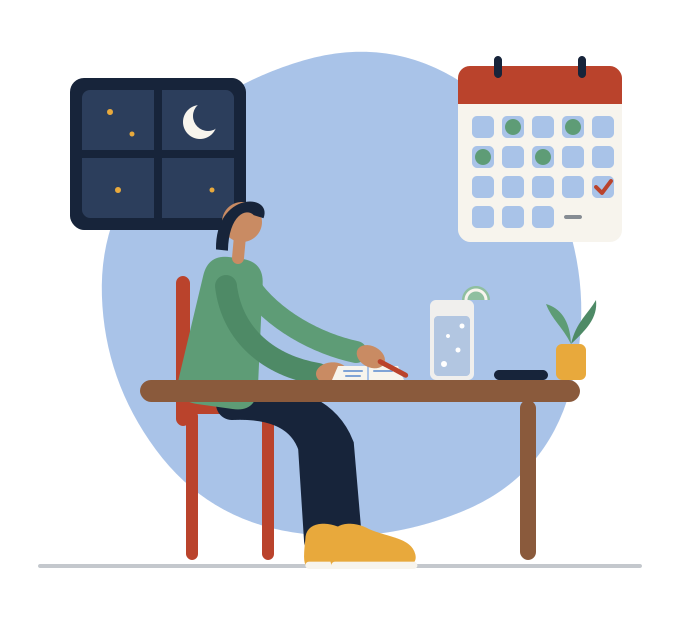
To drink less, plan the ordinary evening before it starts. Check your body first, then write down your reason, keep a diary for a week, set a goal you can count with a review date, make the drink harder to reach at home, and plan the occasions you can see coming.
Wakeman, Senior Medical Director of Substance Use Disorder at Mass General Brigham, starts without labels. "My personal perspective is that every health behavior exists on a spectrum," she told Mel Robbins (The Mel Robbins Podcast, 15:02). Her first questions are about you: how alcohol fits your life, what you like about it, what you don't, what worries you (15:15). And "it doesn't have to be that you stop drinking entirely" (16:14): cutting back, a break and stopping are all real goals.
Her plan below comes from that episode (46:59 to 51:15) and from The Diary of a CEO, with steps from Keith Humphreys, a professor of psychiatry at Stanford (Huberman Lab, 01:51:59 to 01:55:23). Humphreys mentions in that episode that he is working with the drug maker Novo, among others, on research into medicines for drinking (02:48:03); the steps used here are about habits, not medicines. The seven-step grouping is ours.
Start with what's true for you now
1. Check how your body reacts before you change anything
For some people, how they cut down matters as much as the goal. "If your body may have got used to alcohol, stopping or cutting down quickly can make you unwell, sometimes seriously. Talk to a doctor before you change how much you drink. A doctor can help you cut down or stop safely, usually without a hospital stay." That line, from the 1h Protocol to Reduce Your Drinking, follows UK clinical guidance: avoid a sudden reduction if dependent, and supervised withdrawal can happen at home or in the community as well as in hospital (NICE).
Shakes, sweats or feeling sick in the hours after your last drink or on waking, or a drink to steady yourself, are reasons to ask a doctor; no list can tell you whether you are or aren't dependent. If you choose a break, a stop or a big cut, keep this in mind. If, after stopping or cutting down, you get shaky, sweaty, sick or very anxious in the hours after your last drink, talk to a doctor before going further. If you, or someone with you, notice a fit, confusion (not knowing where you are or what day it is), or seeing or hearing things that aren't there, get medical help straight away. Don't wait.
Some situations set the goal. If you're pregnant or trying to conceive, stop for that time and talk to your midwife or doctor. With liver disease, stop, guided by your doctor. Some medicines don't mix with alcohol, so ask your pharmacist or doctor about yours.
2. Write down your own reason
"If you're listening and you want to cut back on alcohol use, I think first figure out your why," Wakeman says (46:59). Her example: someone training for a marathon whose drinking makes the long morning runs hard (47:45). The reason has to hold on a hard evening, because "motivation is fleeting," as she put it on The Diary of a CEO; it can "slip and slide over the course of one day" (01:23:16).
Humphreys asks clients "What are your motives?" and lets them answer, since pushing makes some people "less likely to do it" (01:51:59 to 01:52:26). He helps them turn the reason into something they'll get soon, like money saved for a trip. So pick two reasons that pay off this week, such as waking clear for an early start, and write them where you'll see them.
3. Keep a drinking diary for one week
Wakeman suggests "just jotting down on your phone or in a notebook when you want to have a drink," what you were doing and how many drinks you had over what time (47:08). Like a food journal, it shows the pattern, such as the glass poured when you get home stressed. Humphreys adds where you never drink: "Are there places where you would never use?" Then he looks for what you do there that could work on other days (01:53:03 to 01:53:37).
Count real drinks, not glasses: a big glass can hold two standard drinks or more. Our guide to standard drinks and units shows how to count yours. Tracking has evidence behind it, though not from alcohol studies: across 138 experiments with 19,951 people, monitoring progress helped people reach goals of many kinds, more so when they wrote it down or made it public (Harkin et al., 2016).
Make the plan before the evening starts
4. Set a specific goal with a date to review it
"So it's very specific and that's important for behavior change," Wakeman says of a goal like "I'm only going to drink on this day and I'm going to keep it to this amount." Then add an end point: "the next three weeks I'm going to try this and then I'm going to reassess" (47:45). Across many behaviors, mostly not drinking, goals worked best when difficult but achievable and set publicly (Epton et al., 2017). On The Diary of a CEO, Wakeman suggests you may be able to cut three or four drinking days and keep the social pleasure on the two left (00:53:19).
Drink less, take a break or stop: each is a reasonable start, and our guides to moderate drinking and Dry January help you choose. If you choose to stop, some people find a mutual-help group useful. Read your country's guideline as a lower-risk line. The UK's Chief Medical Officers advise not regularly drinking more than 14 units a week, spread over three days or more (UK Chief Medical Officers, 2016), and the WHO's European office says "no level of alcohol consumption is safe for our health" (WHO Europe, 2023).
5. Change the setting at home
In diaries of 43,089 drinking occasions kept by 17,821 adult drinkers in Great Britain in 2019, occasions with only shop-bought drinks, mostly at home or at friends' homes, held 58.2% of all the alcohol; big nights out held 2.3% (Holmes et al., 2024). At home, routine seems to count for more than intention. In a survey of 414 Australians aged 35 to 60 who drank at home at least weekly, the strength of the home-drinking habit predicted how much they drank better than their intentions did (Aplin et al., 2021). It was one survey at one point in time, and both doctors' advice points the same way: change the setting.
Humphreys asks what's in the cabinet, then: "Could you give that away, so that it's behaviorally harder for you to get this? You'd have to go down the street and go to a liquor store" (01:53:57). Wakeman's version is a bag of chips: some people eat two and stop, others finish the bag, "so it's just easier not to open the bag" (01:25:30). If an open bottle tends to empty, keep less in the house or buy smaller sizes.
Then give the evening's job to something else. Alcohol often eases a bad day, Wakeman says, so find other things that do that, like a class with a friend or a show you like, and "fill up the empty space with other things" (01:27:27 to 01:27:45). See drinking every night for the after-work slot and alcohol and sleep for the nightcap.
6. Plan the social nights you can see coming, and tell people
"You want to make it as easy as possible for yourself," Wakeman says (49:03). Don't pack the week with happy hours; arrange some plans around things that don't involve drinking. For the rest, decide in advance: "a glass of club soda in your hand. The minute you walk in the door," and a friend who knows what you're doing (49:03).
Researchers call that an if-then plan: "If it's Friday drinks, I'll order a soda water first and leave at eight." Plans like these helped people act on goals of many kinds across 94 tests (Gollwitzer & Sheeran, 2006). For drinking, a 2023 review of 16 studies found people drank a little less each week, more so adults outside universities, and the effect faded; plans on paper did better than plans made online, which barely helped (Cooke et al., 2023). So write yours down, one per occasion. Our guides to being sober curious, alcohol-free drinks and drinking at work events help with the scripts.
Then tell the people you drink with. "People can't support you if they don't know," Wakeman says (49:44). Share the goal and the reason, and say how they can help. "You're not criticizing their drinking," she adds. "You're just asking for their help" (50:19).
Keep it going after the first week
7. Review on the date you set, and treat a slip as information
On your review date, compare the diary with your goal and ask of each change: was it possible? Keep what worked and set the next period. The host, Mel Robbins, described the usual trap: the "never again" vow after a big wedding, broken three days later (48:34). With a review date, a bad evening is a note in the diary and something to plan for. Wakeman also advises starting when you're rested (01:26:28).
If an urge catches you at the usual time, our guide to alcohol cravings covers riding it out. Changing your drinking can stir up low mood or worry for a while. If it feels like too much, see your doctor.
Feeling anxious the morning after a heavy night is common in its own right; see hangxiety.
Expect modest gains. In a Cochrane review of 41 trials (19,241 people, median age 20), people using personalized digital programs drank roughly one to three UK units a week less than people given little or no help, a difference that held to six months but wasn't shown at a year (Kaner et al., 2017). A 2023 update covering 80 trials pointed the same way (Sohi et al., 2023). Those are averages from other programs; nobody has tested a plan like this one.
The hopeful part: in two Canadian population surveys, from 1989 and 1993, about three in four people who had resolved a drinking problem for a year or more had done so without treatment or formal help (Sobell et al., 1996), as a 2020 review also found (Tucker et al., 2020). That doesn't replace step 1. If a plan isn't enough, talk to a doctor or a local alcohol service.
Back to the questions
Wakeman starts with questions about how alcohol fits your life, and "there's no judgment here," as she told Steven Bartlett (00:52:33). The steps turn your answers into a plan made before the evening starts. Start the diary tonight.
To build this around your own evenings, try the 1h Protocol to Reduce Your Drinking, a program of practical education. Its free first chapter counts your last week in your own country's drinks, checks how your body reacts when you drink less, finds your pattern and gives you one thing to do next time. The full program takes about an hour: you choose your goal (drink less, a break or stop), set your first two habits at your own times and plan the occasions you can see coming. You leave with a plan built from your answers, a lock-screen card, a fourteen-day sheet, and day-7 and day-14 reviews in your calendar; day 7 asks the body question again. One-tap check-ins follow by email on days 1, 7, 14 and 30. Start free
Frequently asked questions
How can I drink less without quitting?
Set a goal you can count, such as two drinking days a week with a set number on each, and give it a review date, as Wakeman suggests (The Mel Robbins Podcast, 47:45). Then keep less alcohol in the house and write a plan for social nights. See moderate drinking.
How do I cut down on alcohol gradually?
Start from a week of real numbers, then lower your weekly number in steps you can keep, and add drink-free days. The NHS suggests setting a limit before you start drinking, choosing smaller and lower-strength drinks, and alternating with water or soft drinks (NHS). If your body may have got used to alcohol, let a doctor set the pace.
How do I drink less at home?
Change the setting: keep less stock, buy smaller sizes, decide your number before the first drink, and put something else where the first drink usually goes. In Great Britain, most alcohol is drunk on occasions with shop-bought drinks, mostly at home (Holmes et al., 2024).
Is it safe to cut down on alcohol on my own?
Many people cut down without formal help: in two Canadian surveys, about three in four people who had resolved a drinking problem did so without treatment (Sobell et al., 1996). But if your body may have got used to alcohol, stopping or cutting down quickly can make you unwell, sometimes seriously. Talk to a doctor before you change how much you drink. A doctor can help you cut down or stop safely, usually without a hospital stay (NICE).
Should I cut down or stop completely?
Either is a real goal. Wakeman notes that some people find small amounts hard once a bottle is open, and for them it can be "simpler and easier to just avoid it completely, or to only drink at a restaurant" (The Diary of a CEO, 01:25:44). Pregnancy, trying to conceive and liver disease make stopping the goal, with your midwife or doctor. If your body may have got used to alcohol, talk to a doctor before you stop.
Sources
This article draws on Dr Sarah Wakeman's interviews on The Mel Robbins Podcast and The Diary of a CEO, Dr Keith Humphreys's interview on Huberman Lab, and the studies and guidance listed below.
- What Alcohol Does to Your Body, with Dr Sarah Wakeman (podcast episode, The Mel Robbins Podcast, 2024)
- Dr Sarah Wakeman on The Diary of a CEO (podcast episode, 2025)
- How to Overcome Addiction to Substances or Behaviors, with Dr Keith Humphreys (podcast episode, Huberman Lab, 2026)
- Holmes et al, How is alcohol consumption and heavy episodic drinking spread across different types of drinking occasion in Great Britain (event-level diary study, 43,089 occasions from 17,821 adult drinkers, 2024)
- Aplin et al, The explanatory roles of habit and intention on alcohol consumption by adults at home (cross-sectional survey, 414 Australians aged 35 to 60, 2021)
- Harkin et al, Does monitoring goal progress promote goal attainment? (meta-analysis, 138 experiments, 19,951 people, all kinds of goals, 2016)
- Epton, Currie & Armitage, Unique effects of setting goals on behavior change (meta-analysis, 141 papers, many behaviors, 2017)
- Gollwitzer & Sheeran, Implementation intentions and goal achievement (meta-analysis, 94 tests, 8,461 people, all kinds of goals, 2006)
- Cooke, McEwan & Norman, The effect of forming implementation intentions on alcohol consumption (meta-analysis, 16 studies, 2023)
- Kaner et al, Personalised digital interventions for reducing hazardous and harmful alcohol consumption (Cochrane systematic review, 2017)
- Sohi et al, Digital interventions for reducing alcohol use in general populations (updated systematic review and meta-analysis, 80 trials, abstract only, 2023)
- Sobell, Cunningham & Sobell, Recovery from alcohol problems with and without treatment (two Canadian population surveys, 1996)
- Tucker, Chandler & Witkiewitz, Epidemiology of recovery from alcohol use disorder (narrative review of population surveys, 2020)
- NICE, Alcohol-use disorders: diagnosis and management of physical complications (CG100) (clinical guideline, 2010, updated 2017)
- NHS, Tips on cutting down on alcohol (health information page, 2026)
- UK Chief Medical Officers, Low risk drinking guidelines (government guideline, 2016)
- WHO Regional Office for Europe, No level of alcohol consumption is safe for our health (news release, 2023)